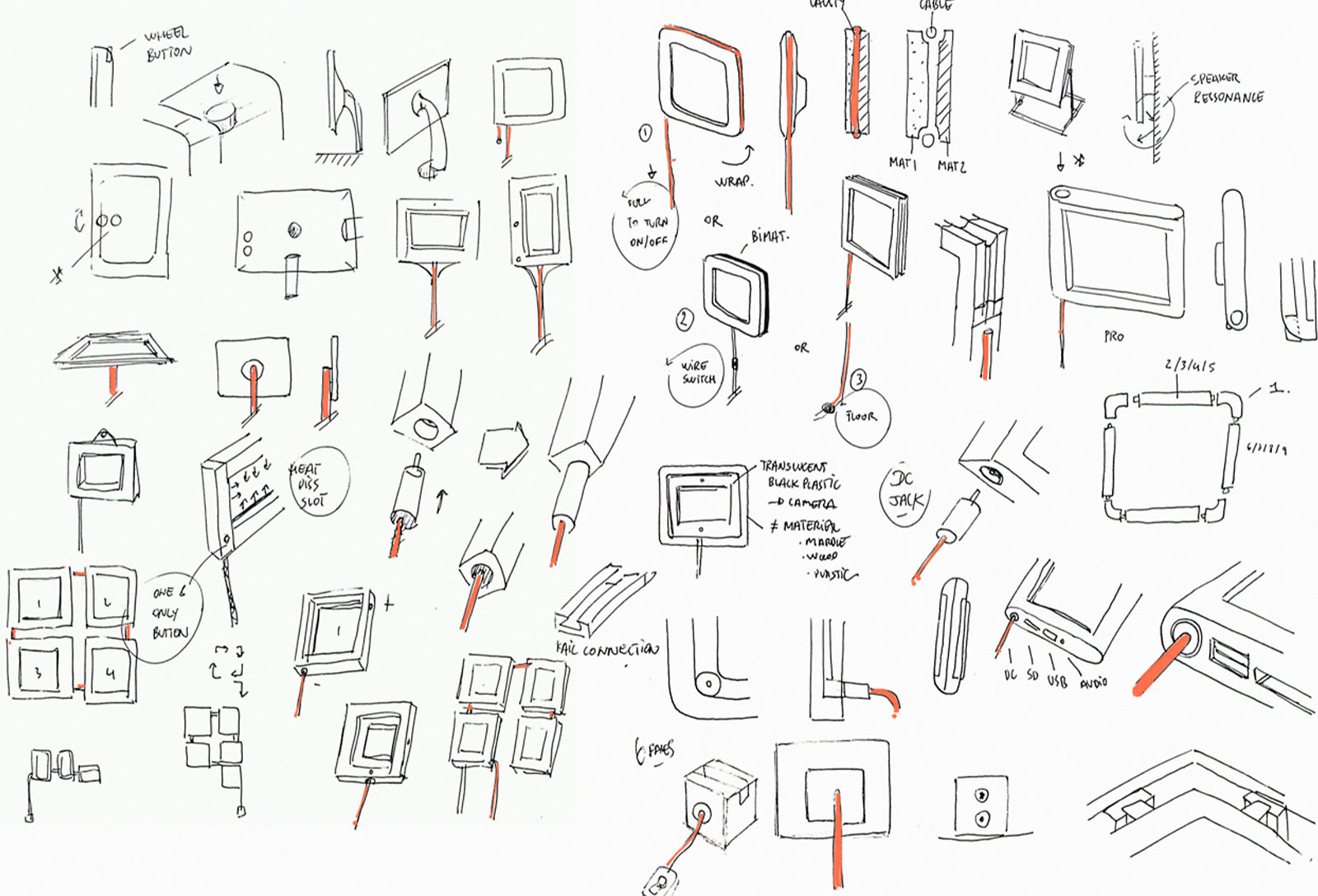
The creation of potential solutions at the design thinking phase
The design has been around for a long time: monuments, bridges, autos, and subway systems are all the result of design processes. Good designers have used a human-centric creative approach to create meaningful and effective solutions throughout history.
In recent years, businesses have begun to pay more attention to design thinking. This is because product and service design is such an important aspect of company competitiveness that many well-known organizations have committed to becoming design leaders, Dunne & Martin, (2006) as cited by (Razzouk & Shute, 2012). it encourages creative problem-solving. Design thinking is a non-linear, iterative approach that allows teams to better understand people, challenge assumptions, redefine challenges, and prototype and test novel solutions (What Is Design Thinking? 2021).
Before one can begin the Design Thinking process, it is critical to consider the first two phases or modes.
In research by Gibbons (2016), design thinking entails six phases, which are; Empathize: undertaking research to learn about what your people do, say, think, and feel. Define: Take all of your research and see where your users' issues are. Ideate: Come up with a bunch of wild, innovative concepts to answer the unmet user needs to be discovered during the define phase. Build actual, tactile representations of a portion of your ideas as a Prototype. Finally, Implement: putting the concept into action by returning to your users for feedback.
What is Ideation?
Ideation is a creative process that involves coming up with ideas to address an issue. The ideation phase is related to terms like creativity, invention, divergence, convergence, and contemplation. The third phase of the Design Thinking process, Ideation, is all about coming up with new ideas and solutions, as the name indicates. Toffah, et al. (2021) ‘Ideation, therefore, is to be understood as an activity to conceive a plan for a particular function or effect’. Ideation encourages open thinking and risk-taking in order to generate strong and original ideas. Ideation is the process where one generates ideas and solutions through sessions such as Sketching, Prototyping, Brainstorming, Brainwriting, and a wealth of other ideation techniques. It's a losing proposition to go into these sessions unprepared. Inadvertently, one can injure or depart from their original conceptualization standpoint, scarring them for future creative endeavors. Going into a situation like this and causing team members to struggle over a lousy brainstorming session could be detrimental to team cohesion (What Is Ideation? and How to Prepare for Ideation Sessions, 2020). Before one can begin the Design Thinking process, it is critical to consider the first two phases or modes. If one does not consider these two modes and their guidelines prior to an Ideation session, you risk becoming lost. One can obtain sufficient background knowledge and generate a clear objective for one brainstorming session by carefully going through the Empathize and Define phase. First Phase Empathize The first two can help us prepare for the brainstorming session. The first step in the preparation process is to research and observe in field studies, as well as to monitor, engage with, and listen to users or consumers, directly observe what they do, how they think, and what they want, asking questions such as "what motivates or discourages users?" or "where do they experience frustration?" The goal is to collect enough data to truly empathize with your users and their perspectives. Empathy in its simplest understanding is the ability to notice, understand, and share another person's thoughts and feelings Cherry (2020).
Approaches/Methodologies to 3d Modeling
Brainstorming: Brainstorming is part of design thinking. It's used during the brainstorming process. It's a favorite among design teams since it allows them to expand in any direction. The use of unconventional and lateral thinking to solve any design problem, with the help of guidelines keeps one on course. It is worthwhile when someone plays "scribe" and write down each concept on the board to capture everyone's ideas during a brainstorming session. Alternatively, keep a running list of ideas and share them with the team. Design challenges frequently necessitate a combination of approaches: brainstorming, as well as its siblings brain dumping and brainwriting. It is the ideation phase that brainstorming is employed.
SCAMPER stands for a number of different innovation ideation methods, including:
Substitute - Find an aspect of your concept, process, or system that you could replace with something else to test whether it improves things.
Combine - While one idea may not work on its own, it can be combined with other ideas, procedures, or products to get a more efficient output.
Adapt - A solution that worked for one problem could be applied to a different one.
Modify- Change an aspect of your scenario or problem to see whether it provides you with new information or adds value to the process.
Put to a new purpose – It's about putting an existing idea or notion to a different use than it was designed for, similar to "adapt."
Eliminate - Remove ineffective procedures in order to streamline them.
Reverse - Turn a process or product around — do things the other way around.
SCAMPER is a unique innovation strategy that combines these distinct techniques to help organizations overcome obstacles or problems. Morphological analysis (MA) yis a strategy for finding, organising, and studying the entire range of possible relationships included in a multidimensional problem complex. MA enables small groups of subject experts to design, link, and assess the parameters of complicated problem spaces internally, resulting in a solution space and a flexible inference mode.

P.T Moore
CEO/ Founder
to deliver the greatest creative and an everlasting branding experience for a client's customers/prospects.